
Pest guide
Flies
Tell indoor and outdoor species apart by their appearance, life cycle and habits.
Interesting facts about flies
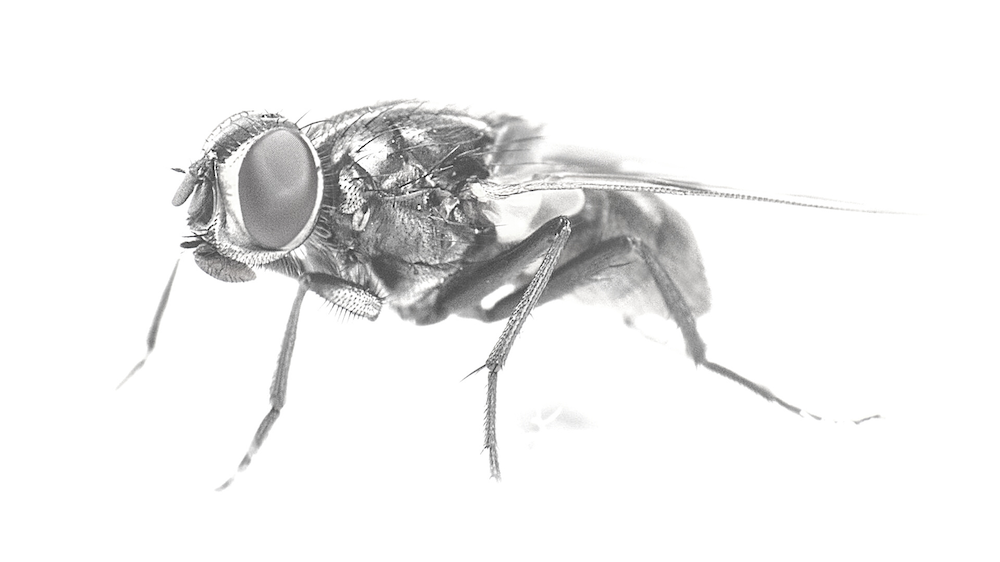
Just like cockroaches, rodents and ants, flies also play a role in cycling organic material and spreading pathogens, such as Campylobacter and SalmonellaJust like cockroaches, rodents and ants, flies also play a role in cycling organic material and spreading pathogens, such as Campylobacter and Salmonella bacteria. Controlling them is more difficult, because of their size and ability to fly through even the smallest cracks. Also, their eggs and larvae can be carried on food products and packages from food providers. That is why the sanitation of food and not bringing containers inside a food plant, hospital, or restaurant are so important.
Breeding
Depending on the fly, some can breed in trash cans, organic matter spilled on the floor, dead rodents inside the structure, filthy drains and sinks holes, and rotten food.
They belong to the Diptera Order, with halteres being their second pair of wings, and mouthparts varying from piercing/sucking (stable flies) to sponging (house flies). Adults generally eat liquids or small particles of food, because they don’t have chewing mouthparts, like their larvae. They are holometabolous insects (egg-larva A.K.A. maggot-pupa-adult) and their longest period of life is generally the larval stage; that is why it is so important to find where they are breeding and control them in their immature stage. Larvae will not be found in exactly the same places where adults fly and rest. For example, adult house and Calliphoridae flies may rest on walls above trash cans and their larvae would be inside, underneath or on the borders of the trash cans, wherever the food source is found.
Types of flies
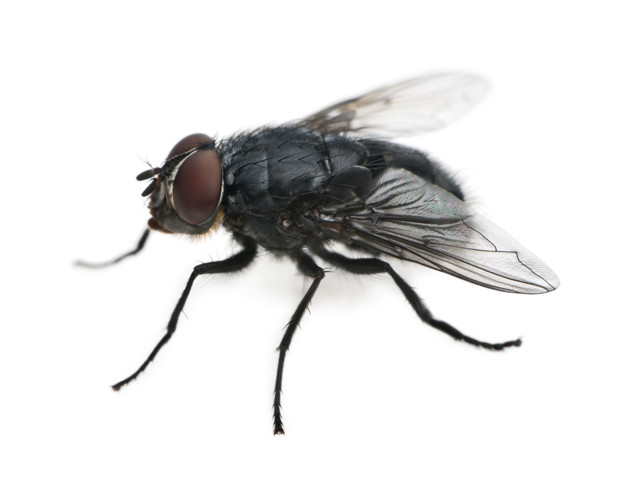
There are approximately 120,000 species of flies. We’ll focus on six of the most common species inside the outdoor and indoor categories.
Outdoor flies (“big flies”, generally larger than half a centimetre)
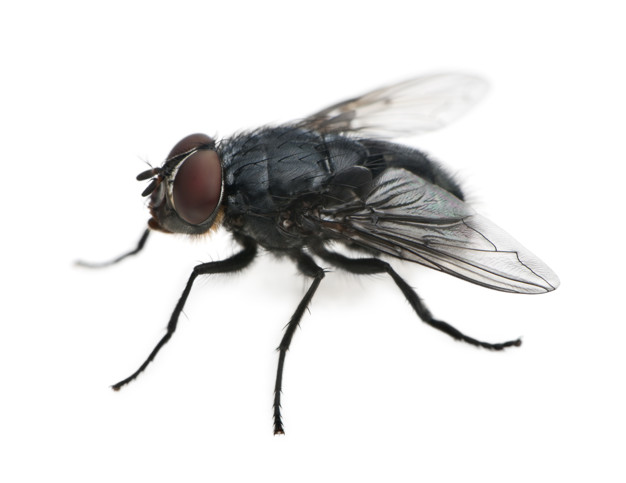
House fly
- Scientific Name
- Musca Domestica
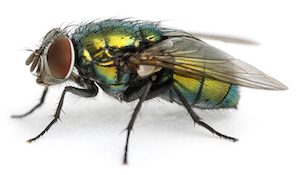
Bottle fly
Bottle fly with a metallic green body.:
- Length
- approximately 4-16 mm long. Color: metallic blue, green and bronze sheen. Eggs: females lay 100 to 200 eggs at a time. Breeding: females lay their eggs on animal carcasses. Life cycle: 9 to 21 days. Further information: they normally live outdoors. When found indoors it is probably due to a dead animal being in the structure.
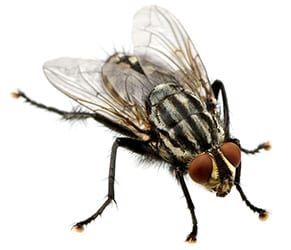
Flesh fly
Flesh fly with a striped gray thorax.
- Length
- Approximately 6-11 mm long. Color: gray with 3 black stripes on the thorax and a red or pink tip on the abdomen. Larvae: females deposit 20 to 40 larvae on animal carcasses. Life cycle: 8 to 21 days. Further information: adults do not bite. They normally live outdoors. When found indoors it is probably due to a dead animal being in the structure.
Indoor flies (“small flies”, generally smaller than half a centimetre)
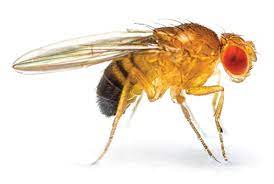
Fruit Fly / Vinegar Fly
Fruit fly with red eyes.:
- Scientific Name
- Drosophila sp. Length: approximately 3-4 mm long. Color: tan to brownish yellow or black. Eggs: females lay 500 eggs at a time. Further information: they have bright red or dark eyes. Dark-eyed fruit flies are less attracted to fruit and more to floor drains, trash cans, dishwashers, urinals and faecal matter.
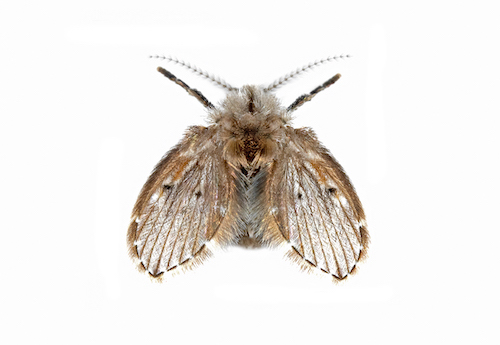
Drain fly
Drain fly with hairy wings.
- Length
- approximately 1-3 mm long. Color: brown. Eggs: females lay their eggs on dirty film layers in standing water. Life cycle: 7 to 20 days. Further information: they have a hairy body and oval-shaped wings with pointed tips. They prefer to live in drains, sewers or under cracked tiles with moisture.
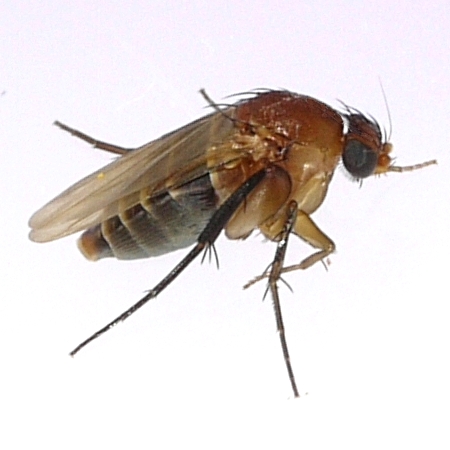
Humpback fly
- Length
- Approximately 1-5 mm long. Color: brown. Life cycle: 10 to 25 days. Further information: they prefer to live in drains, sewers and near decomposing organic matter. Heavy infestations are usually associated with broken underground sewer lines.
Publication references
Talk to your local office.
Find the team serving your area or ask Truly Nolen International.