
Pest guide
Fleas
Learn about their life cycle and why control must also address the surrounding environment.
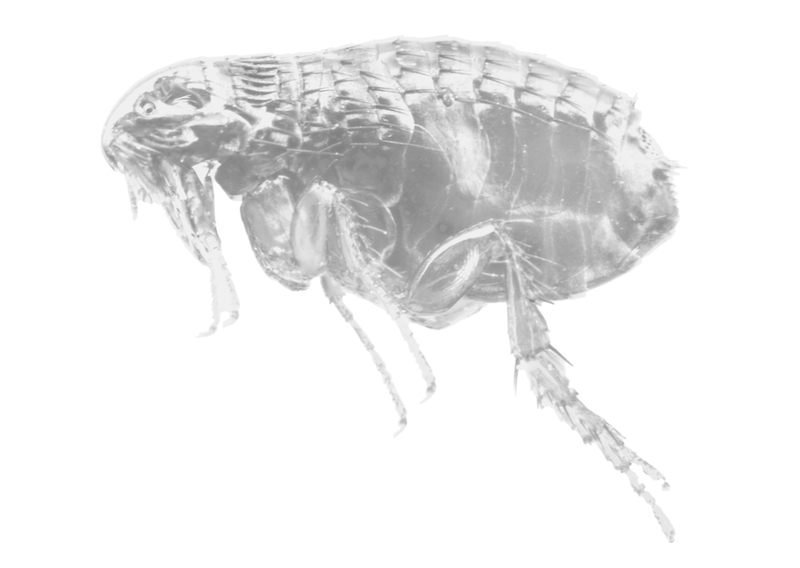
Interesting facts about fleas.
Fleas not only infest cats and dogs, but they are ectoparasites of other mammals and even birds. There are over 2,000 flea species known, and about 74% are associated with rodent presence and 5% parasitize birds.
They are of medical and veterinary importance due to irritation from their bites and their role in transmitting disease agents such as plague, typhus, tularemia, and being intermediate hosts of tapeworms. Another health effect of a flea infestation is flea allergy dermatitis (FAD), the most common dermatologic disease of dogs and a significant cause of miliary dermatitis in cats.
Fleas have complete metamorphosis (egg, larva, pupa, and adult) and are only parasitic during the adult stage. Their management involves treating both the infested animal and the environment, where their larvae are present feeding on organic matter and flea adult droppings with partially digested blood. They cannot go through several generations without having a blood meal.
The entire life cycle of fleas can take two weeks to two years, depending on environmental conditions and food availability. For example, adverse environmental conditions or the absence of a host may delay adult emergence for months to a year. The pre-emerged adult flea within the cocoon, also called pupa, is more resistant to desiccation than immature stages and maintains a low metabolic rate, allowing it to conserve energy and survive for long periods. It has to be stimulated by host cues (heat, movement, carbon dioxide, or pressure) to emerge from the cocoon.
That is why sometimes it is possible to observe flea infestations even when there are no obvious animal hosts on the premises. When pets are not present, such as during vacation periods or when a home or apartment is vacated, flea larvae will continue to develop. When people return to the premises, the pre-emerged and emerged but starved adult fleas will feed vigorously and often cause severe irritation.
Adult fleas only make up 5% of the population, and for every five adult fleas caught, there are 50 eggs, 35 larvae, and ten pupae in the environment. Doing a proper inspection and identifying the pest is vital for conducting prevention and control accordingly.
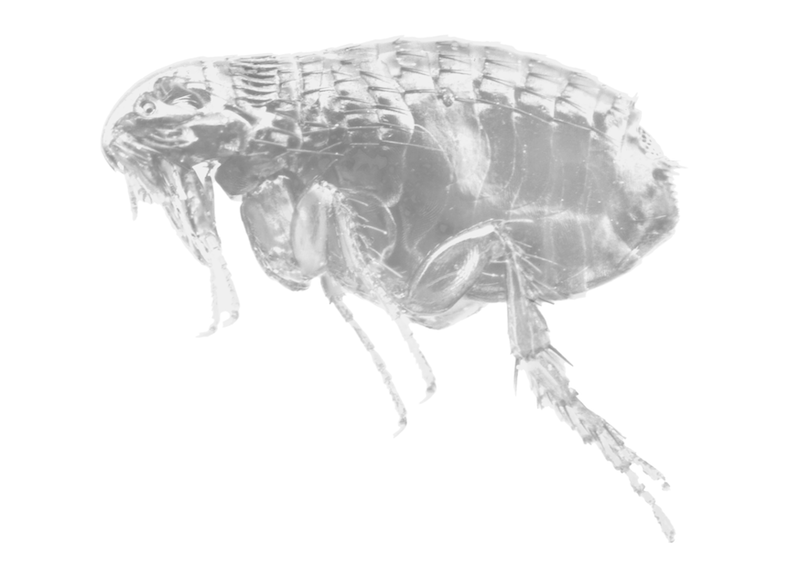
Successfully getting rid of fleas
Truly Nolen service pillars are the 5 Steps of Truly Care, 3 Zone ProtocolTruly Nolen service pillars are the 5 Steps of Truly Care , 3 Zone Protocol , and IPM , critical for successfully getting rid of fleas. We integrate customer communication through a TN sales consultant that instructs our customers on proper and required sanitation, mechanical, physical controls, veterinary treatment for pets and TN prevention/control services.
Publication references
Talk to your local office.
Find the team serving your area or ask Truly Nolen International.